To move from pilot to scale, businesses are starting to embed circular business models into their core business strategy.
Circular business models are more likely to succeed when tailored and integrated into a business’s context. At scale, circular business models are an opportunity to drive financial performance and deliver on net-zero targets.
Integrating and gaining internal buy-in for circular business models based on business context and priorities
Getting started:
Consider the key questions you need to answer to design circular business models that drive business value, including organisational skillset and expertise, product type, and customer needs.
Drive and secure buy-in from internal stakeholders across the business, including early engagement with finance teams.
Explore the examples and learn from others, putting this into practice.
Design circular business models to drive business value
You know your business best. You and your colleagues will understand your organisation’s priorities, capabilities, customers, market, products, and innovation appetite.
Explore the five sections below to consider how you might tailor your circular business models:


Skillset and expertise
What capabilities does your organisation already have in-house?
For example, an organisation with skilled craftspeople focusing on heritage design might find repair and remaking to be a natural choice. Alternatively, an organisation with a workforce highly skilled in technology and e-commerce might find an online solution to be the best fit, such as resale.
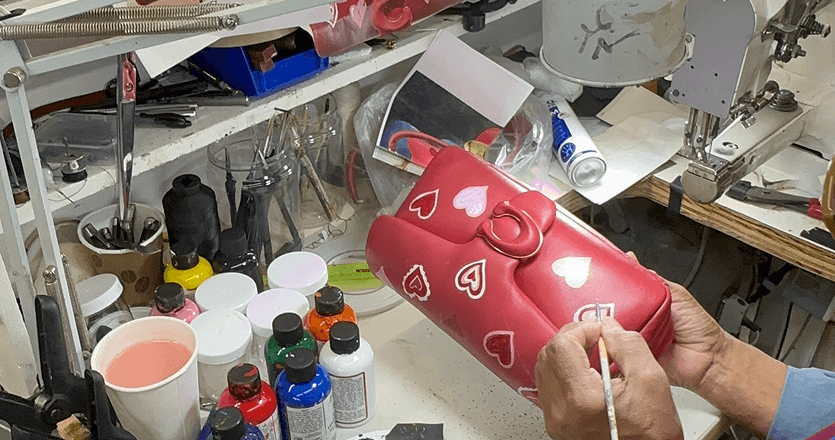
Tapestry: Over the past two years, Coach’s leather craftspeople have restored, upcrafted, and repaired more than 120,000 bags globally for customers, successfully preserving a heritage in leathercraft. Coach identified that one of the most important ways to reduce the climate impact is to extend the life cycle of their products. Coach's study with Columbia University found that buying a Coach (Re)Loved product can reduce an item’s carbon footprint by 76% compared to buying new. Ultimately, Coach (Re)Loved harnesses the creativity and imagination of the designers and craftspeople involved, while also providing a climate beneficial model.
Zalando: In 2020, Zalando brought pre-owned into the Zalando online store, offering a seamless solution at scale. Offering the Pre-owned category at Zalando bridges the gap between the fun of fashion shopping, freshness and self-expression, and unmatched convenience, as customers can shop both pre-owned and new fashion on the same platform.


Psychology is key to helping the fashion industry transform to have a positive environmental impact. By understanding customer behaviour, businesses, industry actors, and policymakers can design and drive smarter systems, reduce waste, and power lasting, planet-positive change."
Carolyn Mair, Cognitive Psychologist.
Drive and secure buy-in from internal stakeholders
Co-ownership across the business, especially internal finance stakeholders, is critical to articulating holistic financial value and ensuring that circular business models are embedded in organisational strategies, plans, and budgets. Building the business case goes beyond the efforts of sustainability professionals alone.
Read more about the five factors to consider to increase internal buy-in:
Engage your finance team as a priority
Designate a lead for the circular business model outside of the sustainability team
Establish cross-functional steering groups
Secure C-Suite buy-in
Harness the expertise of other teams
Engage
Designate
Establish
Secure
Harness


Engage your finance team as a priority
By engaging the finance team as a priority, there is increased buy-in for the business case, including embedding core financial metrics of success.
Reformation: Reformation reported that 17% of their business volume in 2023 was made up of resale, vintage and rental, demonstrating the potential to scale up operations. Reformation engaged its finance team at the beginning of the journey. In 2019, Reformation’s partnership with ThredUP uncovered over USD 1.9 million in financial benefits. Reformation was an early case study trialling NYU Stern Center for Sustainable Business ROSI™ Framework to calculate the wider business value. By embedding clear business rationale at the core of the business and engaging the finance function in the process, Reformation has continued to see success and scale in the circular business model offerings.
Putting these five measures in place early can support the long-term buy-in and expertise needed to deliver on these critical transformations.


“As business models evolve from linear to circular, the role of marketing expands beyond simply selling a product: It's about shaping new habits. This presents a significant opportunity for marketing teams to take the lead in positioning circular behaviours as aspirational, intuitive, and fundamental to the overall brand experience.”
Lasse Lindqvist, Co-founder of ANDx.
Calling for the necessary transformation through internal and industry-wide action — hear from one of The Fashion ReModel participants, Primark.
“Joining the Ellen MacArthur Foundation’s Fashion ReModel supports our ambition to scale circularity at Primark. We’re proud to back the Foundation’s vision and play our part in driving the shift towards a more circular fashion industry.
There needs to be greater acceleration towards circularity in the fashion industry. We started small with our circularity ambitions but are working to scale this within our business so it can be truly embedded in the way we design and make our clothes in the future. Scaling circularity has taken some time, but we truly believe we can use our scale to help deliver real change for the industry, and this partnership will allow us to push Primark further. Through our work with the Foundation, we continue to explore how we further embed circularity in the business, including pre-loved models.
We know there’s more to do, but we’re committed to taking practical steps forward – and to collaborating across the industry to scale solutions that can drive real change."
Nick Lambert, Head of Circularity, Primark Cares


Deep dive: top three benefit areas for circular business models
Circular business models can drive business resilience and create financial value across customer, resilience, and climate, as part of making the case that circular business models deliver financial benefits to your business.